
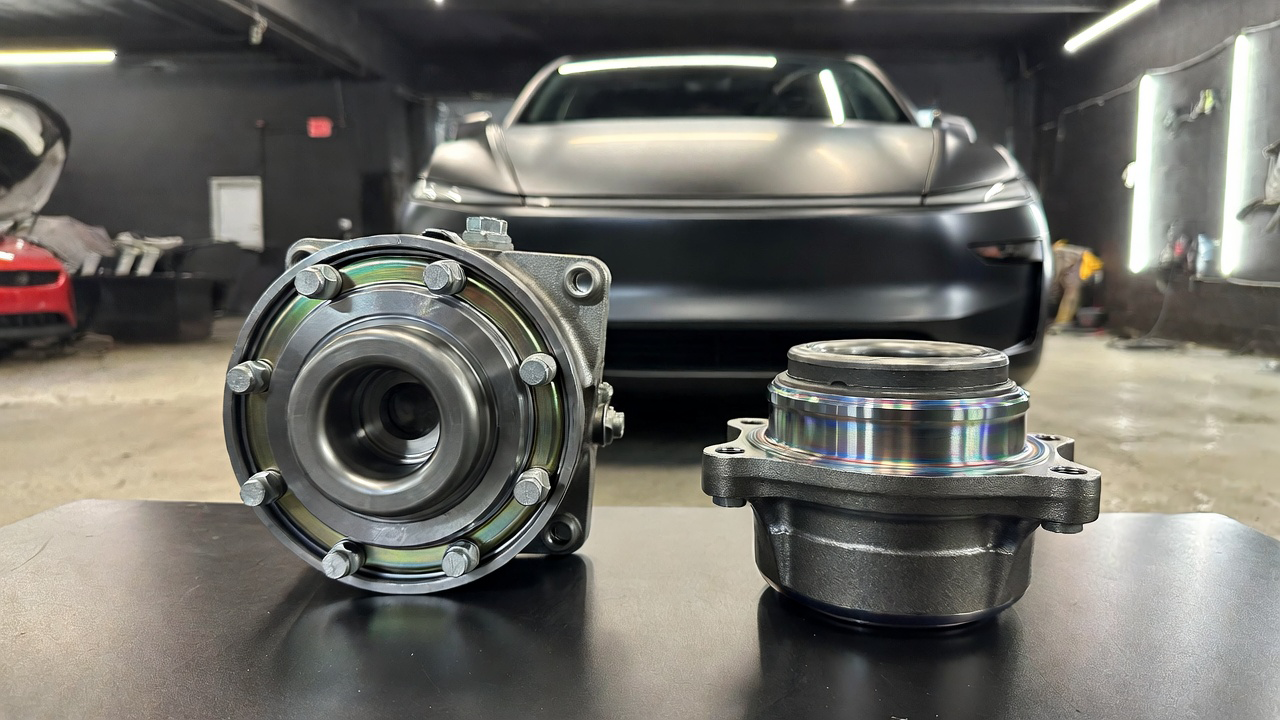
Wheel bearings are a critical component in any vehicle, but they play an even more vital role in electric vehicles (EVs) due to the unique demands of electric drivetrains. If you’re searching for “car wheel bearing” or “wheel bearings,” you’ve likely noticed issues like unusual noises or handling problems in your EV. In this guide, we’ll dive into what wheel bearings are, why they matter for EVs like Tesla models, and how to identify when it’s time for a replacement. We’ll also touch on related terms such as “hub bearing,” “tesla model 3 wheel bearings,” and “tesla wheel bearings,” which often appear in searches for EV suspension parts.
What Are Wheel Bearings and Hub Bearings?
At their core, wheel bearings are the parts that allow your vehicle’s wheels to rotate smoothly with minimal friction. They sit inside the wheel hub assembly and support the weight of the car while enabling free movement. In EVs, hub bearings (often referred to interchangeably with wheel bearings) are integrated into the hub unit, which connects the wheel to the axle. This design is common in modern vehicles, including popular models like the Tesla Model 3, Model Y, and others such as the MG4 or VW ID.4.
Unlike traditional petrol cars, EVs have regenerative braking systems and instant torque delivery, which can put additional stress on car wheel bearings. Terms like “hub bearing” specifically refer to the sealed unit that includes the bearing, hub, and sometimes sensors for ABS or traction control. If you’re dealing with a “tesla model 3 wheel bearings” issue, for instance, these components ensure precise handling and efficiency, crucial for maximising battery range.
From our experience at EV Accessories, queries like “wheel bearings” often stem from drivers noticing symptoms early on. Similarly, “tesla wheel bearings” searches highlight the need for OEM-compatible parts that maintain the vehicle’s performance without compromising safety.
Signs Your EV Needs New Wheel Bearings
Recognising the warning signs of failing wheel bearings can prevent costly repairs down the line. Here are some common indicators:
- Unusual Noises: A humming, growling, or grinding sound that increases with speed often points to worn car wheel bearings. In EVs, this might be more noticeable due to the quieter cabin.
- Vibration or Wobbling: If your steering wheel vibrates or the car feels unstable, especially at higher speeds, it could be a faulty hub bearing.
- Uneven Tyre Wear: Wheel bearings issues can cause tyres to wear unevenly, affecting your EV’s alignment and efficiency.
- ABS Light Activation: Modern hub bearings include sensors; a malfunction here might trigger dashboard warnings.
- Play in the Wheel: Jack up your EV (using proper jack pads for models like Tesla) and check for excessive movement in the wheel – a classic sign of degraded tesla model 3 wheel bearings.
If you’ve been searching for “tesla wheel bearings” due to these symptoms, it’s worth noting that EVs like the Tesla Model Y may experience faster wear from heavier battery packs.
Why Choose Quality Hub Bearings for Your EV?
Investing in high-quality hub bearings ensures longevity and optimal performance. For EVs, subpar replacements can lead to reduced range, increased energy consumption, or even safety risks. At EV Accessories, our selection of wheel bearings is tailored for models including Tesla, MG, and VW ID.4. We stock OEM-spec parts that match queries like “tesla model 3 wheel bearings” perfectly, ensuring a seamless fit.
Consider these benefits:
- Durability: Premium car wheel bearings withstand the high torque of EVs without premature failure.
- Efficiency: Smooth-rolling bearings reduce drag, helping maintain your EV’s impressive mileage.
- Easy Installation: Most hub bearing units are bolt-on, making them accessible for DIY enthusiasts or professional mechanics.
- Compatibility: Search terms like “tesla wheel bearings” lead many to our range, which includes options for front and rear axles.
How to Replace Wheel Bearings in Your EV
While we recommend professional installation for safety, here’s a high-level overview of replacing wheel bearings or hub bearings:
- Gather Tools: You’ll need a jack, jack stands, torque wrench, and basic hand tools. For Tesla owners, use specialised jack pad adapters to avoid battery damage.
- Remove the Wheel: Loosen lug nuts, jack up the vehicle, and remove the tyre.
- Access the Hub: Detach the brake caliper and rotor to expose the hub bearing assembly.
- Replace the Unit: Unbolt the old hub bearing, install the new one, and torque to manufacturer specs.
- Test Drive: After reassembly, check for smooth operation and no noises.
Boost Your EV’s Performance with the Right Parts
Maintaining your EV’s suspension system, including wheel bearings and hub bearings, is key to a smooth, safe drive. Whether you’re tackling car wheel bearing issues or exploring tesla wheel bearings options, quality replacements make all the difference.
Browse our dedicated category for hub bearings and related suspension parts to find the perfect fit for your Tesla, MG, or other EV. We offer fast UK delivery and worldwide shipping, with expert advice available via our contact page.
If you’ve experienced bearing problems or have tips on EV maintenance, share in the comments below!
Note: This post was last updated on 23 February 2026.