
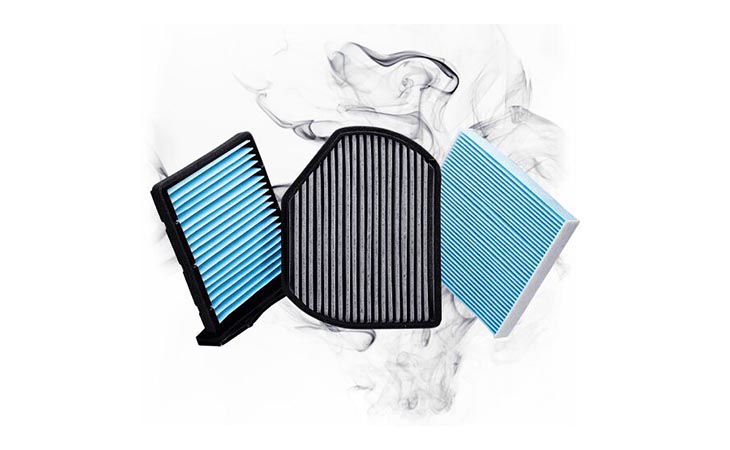
Not all cabin filters are created equal. Choosing the right one can make a big difference to the air quality inside your electric car.
Quick Comparison
| Feature | Pollen Filter | Charcoal Filter | HEPA Filter |
|---|---|---|---|
| Filters Pollen & Dust | Excellent | Excellent | Outstanding |
| Filters Gases & Odours | Poor | Very Good | Excellent |
| Filters Fine Particles (PM2.5) | Average | Good | Excellent |
| Best For | Rural areas | Cities + Allergies | Maximum Protection |
| Price Range (2026) | £12 – £22 | £18 – £35 | £25 – £45 |
| Airflow Resistance | Low | Medium | Higher |
1. Pollen Filters (Standard)
These are the most basic and affordable option. They do a good job of trapping pollen, dust, and larger particles.
Best for: Drivers in rural or suburban areas who don’t suffer from strong allergies.
Downside: They offer little protection against exhaust fumes, odours, or very fine particles.
2. Activated Charcoal (Carbon) Filters
These contain a layer of activated carbon that absorbs gases, odours, and harmful volatile organic compounds (VOCs).
Best for: Most UK drivers — especially those who live in or around cities, drive in heavy traffic, or have allergies.
Charcoal filters are currently the most popular choice among EV owners in the UK for good reason.
3. HEPA Filters
HEPA (High-Efficiency Particulate Air) filters are the gold standard. They capture 99.97% of particles as small as 0.3 microns — including fine dust, pollen, bacteria, and even some viruses.
Best for: People with severe allergies, asthma, young children, or anyone who wants the absolute best air quality possible.
Note: HEPA filters can slightly reduce airflow due to their dense construction.
Which One Should You Choose?
- Live in the countryside? → Pollen filter is usually fine
- Drive in cities or suffer from allergies? → Charcoal filter (best all-rounder)
- Want maximum protection? → HEPA filter
Where to Buy Quality EV Cabin Filters
We stock a full range of high-quality Pollen, Charcoal, and HEPA cabin filters for most popular electric vehicles.
EV Cabin Air Filter FAQs
What’s the difference between pollen and charcoal filters?
Pollen filters mainly trap dust and pollen. Charcoal filters also absorb gases and odours thanks to the activated carbon layer.
Are HEPA filters worth the extra money?
Yes, if you have severe allergies, asthma, or want the highest level of air purification. For most people, a good charcoal filter offers the best balance of performance and price.
How often should I change my cabin filter?
We recommend changing it every 12 months or 15,000–20,000 miles in the UK. Change it sooner if you notice reduced airflow or musty smells.
Can I mix filter types?
No — you must use the correct type for your vehicle. Always check your car’s specifications before buying.
Do cabin filters affect fuel efficiency or range?
Very slightly. A very clogged filter can make the blower motor work harder, which uses a tiny amount of extra energy. A clean filter helps maintain efficiency.